
1. Quick Takeaways
- Three appeal stages are available: Initial OPM review, reconsideration, and Merit Systems Protection Board appeal.
- 30-day deadlines are critical: If you miss the reconsideration or MSPB appeal deadline, you’ll lose your appeal rights completely.
- A new medical specialist reviews reconsiderations: Your case goes to a completely different person at Boyers who must re-read your entire file so there’s a fresh set of eyes at each new stage.
- Approval can happen at any stage: Even during MSPB appeals, the OPM can reverse their decision before a hearing.
- Interim payments start immediately: Approved applicants receive about 80% of estimated benefits while your final annuity is being processed.
2. Common Questions
Q: Should I be scared if my initial application gets denied?
A: No – denials are common, and the appeals process has multiple stages with good success rates. The key is meeting those 30-day deadlines for each appeal stage.
Q: Do I have to appear in person for MSPB hearings?
A: No – hearings are typically conducted by phone or video conference. You can participate from anywhere.
Q: What happens to my health insurance during appeals?
A: If approved, your federal health insurance can be reinstated retroactively, potentially covering out-of-pocket medical expenses you paid while waiting.
Q: How long does the entire appeals process take?
A: Initial review takes 8-12 months, reconsideration takes 4-6 months, and MSPB appeals take 6-8 months. Each stage can vary significantly.
Q: Can I submit new medical evidence during appeals?
A: Yes – you can submit additional documentation during reconsideration within 30 days or request a 30-day extension for more time.
3. Full Webinar Transcript
Overview of Today’s Discussion
Krista: So today we’re going to talk about the timeline that we’ll be following during an application process. That’s all three stages, so we’re going to be going over the reconsideration process and what an MSPB appeals looks like.
The Three-Stage Application Process
Krista: So first, talking about that application process, Leah, what can you tell us about the application process?

Leah: Yeah, so in general, the first three stages of the application process are first the initial OPM [Office of Personnel Management] review. This includes submitting an application that is looked at for consideration in the initial OPM review.
If you are a current federal employee, your application will first go through your employing agency for processing before it goes to the OPM. If you have been separated 31 or more days, it will go straight to the OPM. Generally, this process can take anywhere between 8 to 12 months currently. This is an estimate – each case takes its own amount of time and there is no set deadline for OPM review.
If you happen to get approved at the initial OPM review stage, fantastic. If not, don’t worry – you have appeal rights. The first appeal stage is called reconsideration.
Reconsideration Appeals Timeline
Leah: This stays with the Office of Personnel Management at their Boyers disability section. It happens when an initial denial is appealed. And the reconsideration request – you need to know – it has to be submitted within 30 days on average from the date of the denial. These cases are taking between 4 to 6 months for adjudication. Again, that’s an average – there is no set deadline for OPM to complete their second review.
If you’re approved at reconsideration, great, fantastic. If you are not approved at reconsideration, you still have another appeal to what’s called the Merit Systems Protection Board.
Merit Systems Protection Board Overview
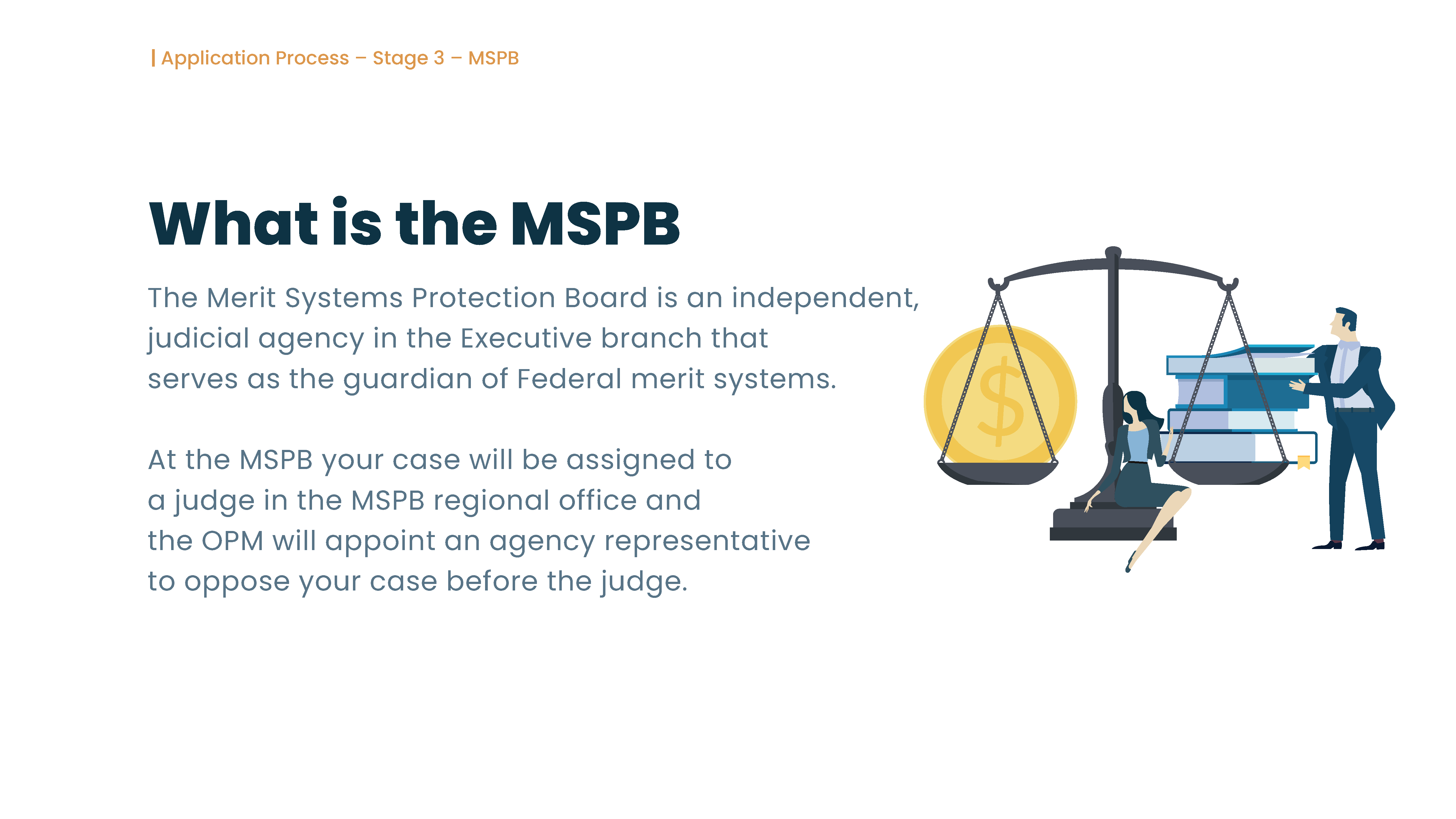
Leah: You appeal this to the Merit Systems Protection Board, which is an agency outside of the OPM. These appeals are very much a case-by-case basis but can oftentimes take between 6 to 8 months. Generally speaking, the first 120 days are the most important – that’s when a judge will want to hear the case. But again, some cases can move a bit sooner, some cases can take a little bit longer.
Those are the three general first steps for an application.
Should You Be Scared of the Appeals Process?
Krista: So Leah, if someone’s denied, should they be scared of this process?
Leah: They should not be scared of this process. Historically, reconsiderations can happen for a variety of reasons. Personally, we’ve seen an increase over the recent years. They can happen for a variety of reasons – sometimes there are things that need to be improved in a case, other times there are points within your case that will be up for interpretation and argument.
So it’s not a scary process to go through. The only thing to really be worried about within reconsideration is making sure that you meet the initial deadline to submit reconsideration. It is very important to make sure that your reconsideration request is submitted and received by the OPM within the first 30 days. If you miss that deadline, you’re going to be in a lot of trouble.
Three Options at Reconsideration
Krista: Thank you for giving us that overview process. And so, starting off, what’s the reconsideration process?
Leah: Yeah, so you’ll have three options at reconsideration. You’ll get an appeal form with three boxes that you can choose between. The first is just to review the evidence that is currently on file and have the OPM make a new decision based upon a re-review. The second is to submit new evidence either within the first 30 days, or lastly, within a 30-day extension.
Most of the time we do recommend submitting additional documentation. It never hurts to try to strengthen your case further.
Just know that your case goes to the OPM – it’s going to stay within that Boyers disability section which made the initial decision.
Understanding the Extension Process
Krista: So, to recap for that reconsideration process, you have 30 days to submit an extension and then another 30 days to submit the overall request?
Leah: Correct. So, when you submit the reconsideration request form, you’ll have those three boxes. You can either choose to choose the first box and submit nothing and just have them do a re-review. You can choose a second box and submit with additional documentation at that time. Or your third box will give you an additional 30 days to work with. Either way, it all goes to the Boyers disability section where a new medical specialist will review the file.
Fresh Eyes Review Your Case
Krista: Okay, now that we’ve reviewed the three options of reconsideration, who’s going to be looking at that? Will it be the same person who made the first denial, or is it going to be someone new?
Leah: No matter what, it’s going to go to a new person, which is a great system. If you’re a medical specialist, you’re human and you’re probably thinking to yourself, “Yeah, I made a great decision, why would I reverse it?” And so, by giving it to new medical specialists, you get a nice fresh set of eyes looking at everything.
That specialist is not only going to review what you submit new at reconsideration – they have an obligation to also reread through the entire initial application, and they may come up with a different determination from that first medical specialist. But they are all still within the same Boyers disability office up in Boyers, Pennsylvania.
Two Outcomes After Reconsideration
Krista: Okay, so now after the review is completed by this new medical specialist, you’ve got two options, right?
Leah: You can have an approval. If you get a reconsideration approval, fantastic. The OPM is going to start to process that approval. You’ll usually begin to receive interim payments as you await your application to be finalized. Finalization of an application to include finalized payments and back pay does take a while, so give OPM time. Traditionally, it can take up to 5 months.
Now if you get denied, guess what – there’s still another chance. You can appeal to what’s called the Merit Systems Protection Board, which is an agency outside of the Office of Personnel Management. You do need to submit this appeal to the MSPB – that Merit Systems Protection Board – within 30 days of your receipt of the second denial letter, which is issued at reconsideration.
Reconsideration Process Timeline Summary
Krista: And so now that we’ve gone over the reconsideration process, a short recap of it is it’s going to take about 60 days to submit everything, and after that you’re just kind of waiting. And if you do receive a denial on the reconsideration process, you’re going to go on to the MSPB or the Merit Systems Protection Board.
MSPB Process Details
Krista: What is this process? How long does this process take, Leah?
Leah: Yeah, so if you’re denied at reconsideration, you are able to appeal to the Merit Systems Protection Board – like I said, within 30 days of your receipt of the denial letter. The MSPB permits online filing if you’re comfortable with the computer. You can also fax or mail in your appeal to the regional office, which will be designated on the reconsideration denial letter.
The basic gist of the Merit Systems Protection Board is they are a quasi-judicial administrative agency. They hear a number of types of appeals. For purposes here, just know they do have jurisdiction, which means they have the power to hear appeals on Disability Retirement claims.
Judge Assignment and Hearing Process
Leah: When you appeal to the MSPB regional office, you’ll be assigned a judge. Ultimately, that judge, if the case cannot be settled, will be the one making the determination at this appeal stage.
You’ll go through a hearing if you choose to have one. Typically, they’re telephonic or video conference. You will be in attendance, if you have a representative they will be in attendance, the judge will be in attendance, and the OPM is permitted to have a representative as well, which will come out of their Washington DC appeals office.
Now keep in mind, the option for a hearing is yours. You will get to elect if you want a hearing or not on your initial appeal form. You can choose to later not have a hearing, but if you’re thinking that it’s even a possibility to have a hearing, you’ll want to check the box saying yes, I do want a hearing. That is your right, not the OPM’s right.
Hearing Format Questions
Krista: And so, do people that are going through the board appeal, do they have to show in person to these appeals, or is it – you said it’s telephonic, correct?
Leah: Historically it has been telephonic even pre-pandemic. Nowadays they do offer the option of Zoom appeals or like through Microsoft Teams, but traditionally it’s still telephonic.
MSPB Appeal Outcomes
Krista: Okay, Leah, so what happens if someone’s approved at the board, or if they get denied?
Leah: Yeah, so looking at the two options. So, let’s say you have an approval first. First thing to note is an approval can happen at any stage of a board appeal. The Office of Personnel Management, since they do have a new representative looking at the case, could potentially reverse if they review the case file and have different feelings, or if you’re submitting new documentation that they review before a hearing.
So, if that approval happens, it’s very similar to the reconsideration approval where you’ll get interim payments, and processing takes about 5 months.
Judge Decisions and Appeal Timeline
Leah: Now if you go through a full hearing and have the initial decision made by the judge instead of the OPM giving up at that stage, the Merit Systems Protection Board judge will issue what’s called an initial decision.
That initial decision will become final within 35 days. After the 35th day, if no appeal has been submitted, the OPM then has 20 days to follow the orders of the judge and issue that final approval letter. And just like the previous stages, start those interim payments and get you towards finalized processing.
Further Appeal Rights
Leah: Now keep in mind, I talked about those initial 35 days where the decision is not yet final. Both parties at this stage have a right to submit an appeal to what’s called the petition for review to the full Merit Systems Protection Board in Washington DC.
Historically speaking, the OPM does not traditionally exercise this right, but they have the right to do so. I’ve seen it happen a couple of times in the many years I’ve been doing this, so it’s not a guarantee that just because a judge found you entitled to Disability Retirement benefits that the OPM won’t appeal – it’s just much less likely.
Options After MSPB Denial
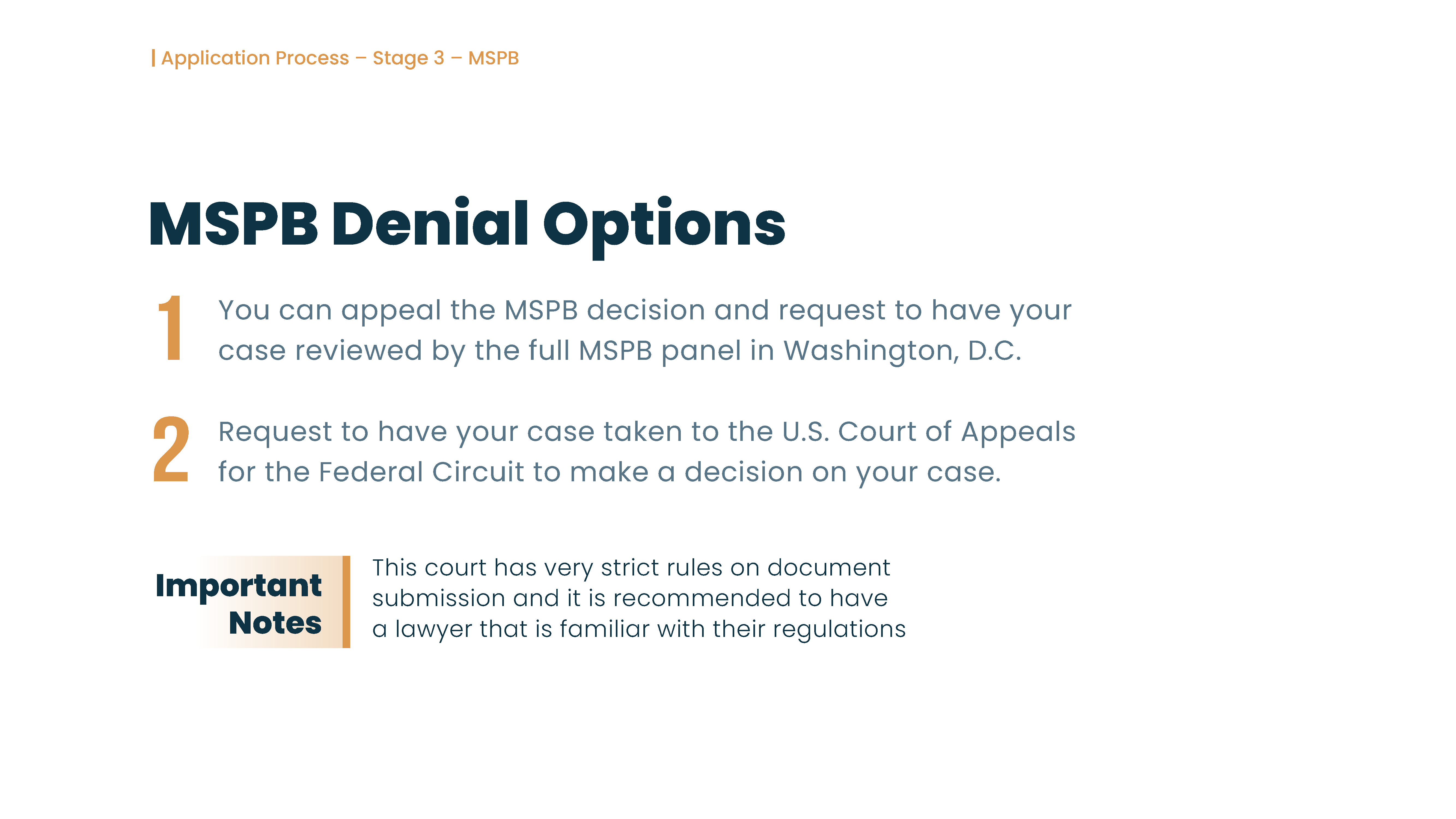
Leah: Now if you were to get denied at the MSPB, you have appeal options. Like I said, there’s that petition for review to the full board in Washington DC. Within certain parameters, you can also request to have your case taken to the U.S. Court of Appeals to the Federal Circuit to make a decision on your case.
Now keep in mind, the petition for review – it keeps it within the Merit Systems Protection Board, so they are typically a little looser with their rules. You do have to follow certain rules for the submission, but it’s not nearly as strict as the rules in place for the U.S. Court of Appeals to the Federal Circuit.
That appeal stage has some very, very strict rules as far as what can be submitted and when it can be submitted and how it’s supposed to be formatted and what it’s supposed to look like.
Understanding Interim Payments
Krista: And so once you’re approved, you’re going to start receiving interim payments and eventually back pay. So, Leah, can you tell us a bit about what those are?
Leah: Yes, so interim payments – they’re not your full annuity payment. This is just what OPM is giving you to get by. Typically, they’re around 80% of what the OPM thinks your current monthly annuity should be.
So again, it’s 80% of what they think they should be paying you. If you’re in your first year of Disability Retirement, it’s 80% of that 60% high-three salary. If it’s already been over a year since you’ve been out of work, then they’re probably going to be paying you 80% of that 40% since you’re in your second year.
Interim payments do not yet deduct health or life insurance – again, it’s just meant to get you by while they figure out your finalized calculations. The reason they underpay people is because it’s a lot harder to go back if you’ve overpaid a person and collect money from them, versus “Oh hey, we underpaid you, here’s the difference” as they finish up your calculations.
Understanding Back Pay
Leah: You’ll also potentially start to get back pay. That’s any annuity that is owed to you from when your annuity should have started, which is typically the earlier of either your last day in pay status with your employing agency or your separation date from your agency.
Back pay traditionally comes in a big chunk. I’ve heard of it being done in several installments, but the goal is, like it says, to back pay you for any past annuity owed.
Health Insurance Coverage Questions
Krista: And so you mentioned insurance and how it doesn’t come out of your interim payments, but what happens if someone has been on leave without pay for over a year and they’ve lost their insurance coverage, or they’ve been separated no longer have it – how does that work out?
Leah: Yeah, the good news is if you were eligible and elected to keep your insurance into retirement, you get it reinstated, but it happens with finalized payments. So, like I said, you’ll be on those interim payments for a while, potentially several months. Then they’ll figure out your back pay and your finalized payment, and the finalized payment will include deductions for your insurance. You should get the option to have your insurance reinstated retroactively as well.
Retroactive Insurance Benefits
Leah: This can be a really good benefit for people that have gone without health insurance for a long time and potentially need to recoup some out-of-pocket costs. Keep in mind, out-of-pocket expenses that are covered for reimbursement with retroactive reinstatement for insurance are things that are out of pocket – so if you went without insurance and just paid your doctor or healthcare provider directly, or if you paid quite a bit for continuing insurance through COBRA.
What is not covered is if you went out on the marketplace and purchased a private insurance policy and have been paying for those premiums. So, if you had done that, it’s probably not a great idea to do retroactive reinstatement just because you won’t recoup those costs.
Insurance Premium Handling
Leah: Now if you do have your insurance reinstated retroactively, OPM should be able to take out those premiums from your back pay as appropriately, so that you’re not left with a big bill at the end that you’re having to pay from future annuity payments.
Legal Representation Coverage
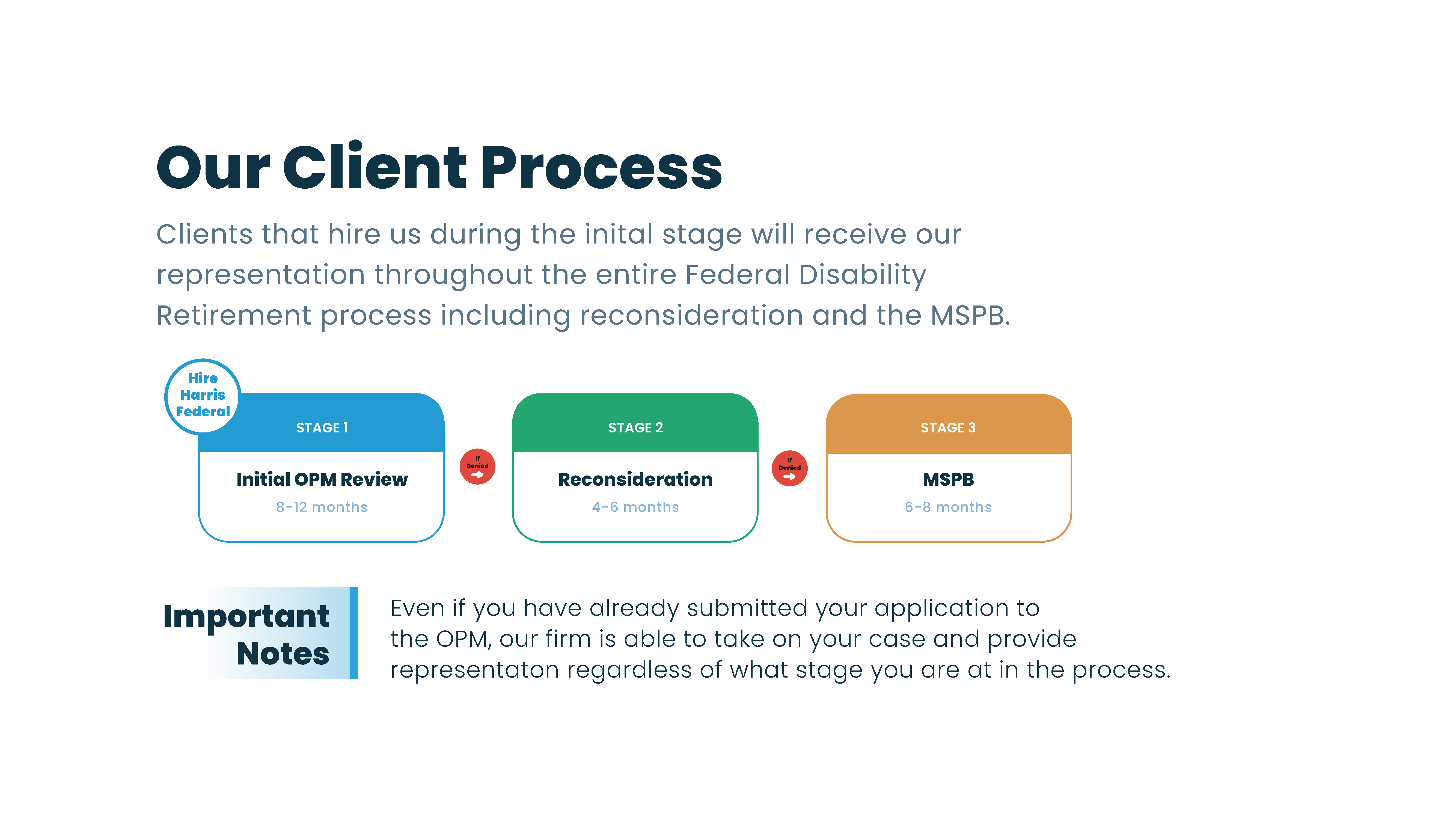
Krista: Okay Leah, so I want to follow up on one thing that you mentioned, which is how clients are covered until the board. So, if you hire us at the initial stage or even at reconsideration, we’re going to be there with you throughout all these appeals processes.
And if you hire us at the initial stage and are denied, then we already have all of your documents ready to have a quick reconsideration.
Leah: That’s correct, Krista. Like this slide shows, we cover three stages with that initial appeal: reconsideration and the initial board appeal. Most of our clients do hire us at the initial OPM review just because they want to have peace of mind in filling out the applications, and most of our applications are approved at the initial stage.
Hiring During the Process
Leah: An important note is we have people hire us that have already potentially submitted an application but have not yet received an initial decision. Sometimes the OPM or even their employing agency reach out because something wasn’t completed correctly or they need further information. If you hire us at that stage, you’re still considered to be at the initial stage and hiring us.
Firm’s Mission and Success Rate
Leah: So this kind of concludes what we’ve talked about as far as the initial and the appeal stages that we cover, and our overall message is we’re here to help you. We’re a law firm that is very much client-focused.
Going through a Disability Retirement can be an extraordinarily difficult thing. You’re facing already medical conditions that have arisen or worsened and are already interfering with your life, both personally and at work.
Applications themselves – the forms and gathering medical documents – can be a very daunting task, which is why our firm is set up to help you. We take the burden off of your shoulders. We help you through both the initial application plus the appeal stages as needed, and by doing so, we do have a 99% success rating.
So, the gist of our message is we’re here to help. Please consider us if you’re struggling through this process – we want to help you.
Final Recap and Encouragement
Leah: So just as a final recap, just know that initial applications can be denied. You do have appeal rights in place. It is not necessarily a bad thing to go through appeals. It can be scary, but there are plenty of options to still seek approval, and it is a worthwhile endeavor.
Just keep in mind those deadlines that we talked about, especially the strict 30-day ones there with the initial reconsideration as well as the 30 days from receipt of the denial letter to file the board appeal, and then after the board appeal, your deadlines to file a secondary appeal to either the full MSPB or the Court of Appeals.
But overall, just know that this is a worthwhile endeavor. Don’t feel disheartened just because you get an initial denial.
Krista: We’re here to take away the uncertainties of this appeals process and are going to be here to answer any of your questions.
We know this can be a stressful time. We deal with these every day and help people walk through them and know how to approach them. If you’re ready for help, give us a call for a free 30-minute consultation and check out our YouTube playlist covering all things denials and appeals.